Culture & Heritage
Nov 2, 2026·4 min read
The Art of H'Mong Beeswax Batik & Indigo Dyeing
Discover the heritage of copper stylus wax drawing and natural cold vat indigo fermentation practiced by Black H'Mong artisans in Cát Cát Village.
A comprehensive independent field guide featuring transparent cost estimates, four-season packing advice, trail transit logistics, and cultural etiquette.
Estimate group budgets with live currency conversion, check optimal travel seasons, check off packing essentials, and read respectful cultural etiquette.
Adjust group size and elective options to calculate realistic on-site trip expenditure in Vietnamese Dong (VND) and US Dollars (USD).
Supports 1 to 20 travelers (default: 2 persons)
Fixed conversion rate: 25,400 VND = 1.0 USD. Actual vendor prices may vary slightly on-site.
| Cost Component | Calculation Formula | Amount |
|---|---|---|
| Village Admission Ticket | 150.000 ₫ × 2 person(s) | 300.000 ₫ |
| Roundtrip Transportation | Taxi (1 4-seat cab(s)) | 120.000 ₫ |
| Traditional Attire Rental | Self-arranged / Not selected | 0 ₫ |
| Licensed Local Guide | Self-arranged / Not selected | 0 ₫ |
| Food & Dining Service | Self-arranged / Not selected | 0 ₫ |
Each season in Cát Cát brings distinct atmospheric beauty. Choose the optimal window for your travel style.
The premier season when Muong Hoa valley glows with golden ripe rice paddies, crisp dry mountain breezes, and clear azure skies.
Light breathable daytime attire with a windbreaker or cardigan for cool morning mists and brisk alpine evenings.
Golden morning light between 8:00 - 10:00 AM illuminates terrace ridges with spectacular contrast and warm tonality.
The premier season when Muong Hoa valley glows with golden ripe rice paddies, crisp dry mountain breezes, and clear azure skies.
Recommended Clothing: Light breathable daytime attire with a windbreaker or cardigan for cool morning mists and brisk alpine evenings.
Photography Tip: Golden morning light between 8:00 - 10:00 AM illuminates terrace ridges with spectacular contrast and warm tonality.
Wild cherry and plum blossoms blanket stone pathways and roofs alongside joyous festive sounds of the Gầu Tào celebrations.
Recommended Clothing: Layered clothing, light sweaters, and a scarf for fluctuating early-spring temperatures and breezy afternoons.
Photography Tip: Frame blossoming peach branches in the foreground against weathered timber roofs and misty valley backdrops.
Water-pouring season turns terraces into glistening mirrors, followed by lush green vegetative vigor and thundering waterfall volume.
Recommended Clothing: Breathable cotton fabrics, sun hat, sunglasses, and a compact umbrella for sudden mountain showers.
Photography Tip: Post-rain showers frequently yield rainbows across the waterfall mist with drifting low clouds.
Atmospheric mist drapes over dark timber hamlets, glowing hearth fires warm traditional homes, and late buckwheat carpets hills.
Recommended Clothing: Heavy thermal down jackets, wool beanies, gloves, and sturdy insulated hiking shoes with non-slip treads.
Photography Tip: Capture chimney smoke drifting from wooden roofs blending into heavy twilight mountain mists.
Tick off items as you pack before hiking into the Si Cặp canyon. Progress is safely stored on your device.
Cát Cát is a living indigenous Black H’Mong ancestral settlement. Your mindfulness preserves cultural integrity.
Politely greet and receive consent before taking close-up portraits of residents, especially elders and craftswomen.
Do not touch ancestral altars in the central bay of timber homes, sit with your back to them, or enter private sleeping quarters uninvited.
Encourage sustainable schooling by patronizing adult craft workshops instead of handing out money or sweets on the trail.
Never discard plastics or trash into mountain streams or ravines. Pack out whatever you carry down the valley.
This is an independent cultural guide and documentation project. We do not sell tickets online or broker tour packages. All admission fees and service payments are handled directly with local community members on-site.
Cát Cát Village sits 2.5 km southwest of Sa Pa’s stone church. Choose the transportation mode best suited to your schedule and stamina:
Follow Fansipan Road downhill from Sa Pa center. The smooth asphalt road winds alongside scenic views of the vast Mường Hoa terrace canyon on your left.
Walking down is gentle and panoramic. However, the return ascent is steep (300m elevation gain); we strongly recommend taking a motorbike taxi or cab back up.
Ideal for families with young children, seniors, or small travel parties. Taxis drop off passengers directly at Ticket Booth 1 or Booth 2.
Save your driver’s phone number or business card so you can request an ascent pickup, as mobile signal at the bottom of the valley can be intermittent.
The most agile and iconic mountain transit. Experienced local riders navigate the curves easily and can meet you at the trail terminus near the suspension bridge.
Always confirm the standard flat rate of 40,000 ₫ per person before boarding. Helmets are provided and mandatory.
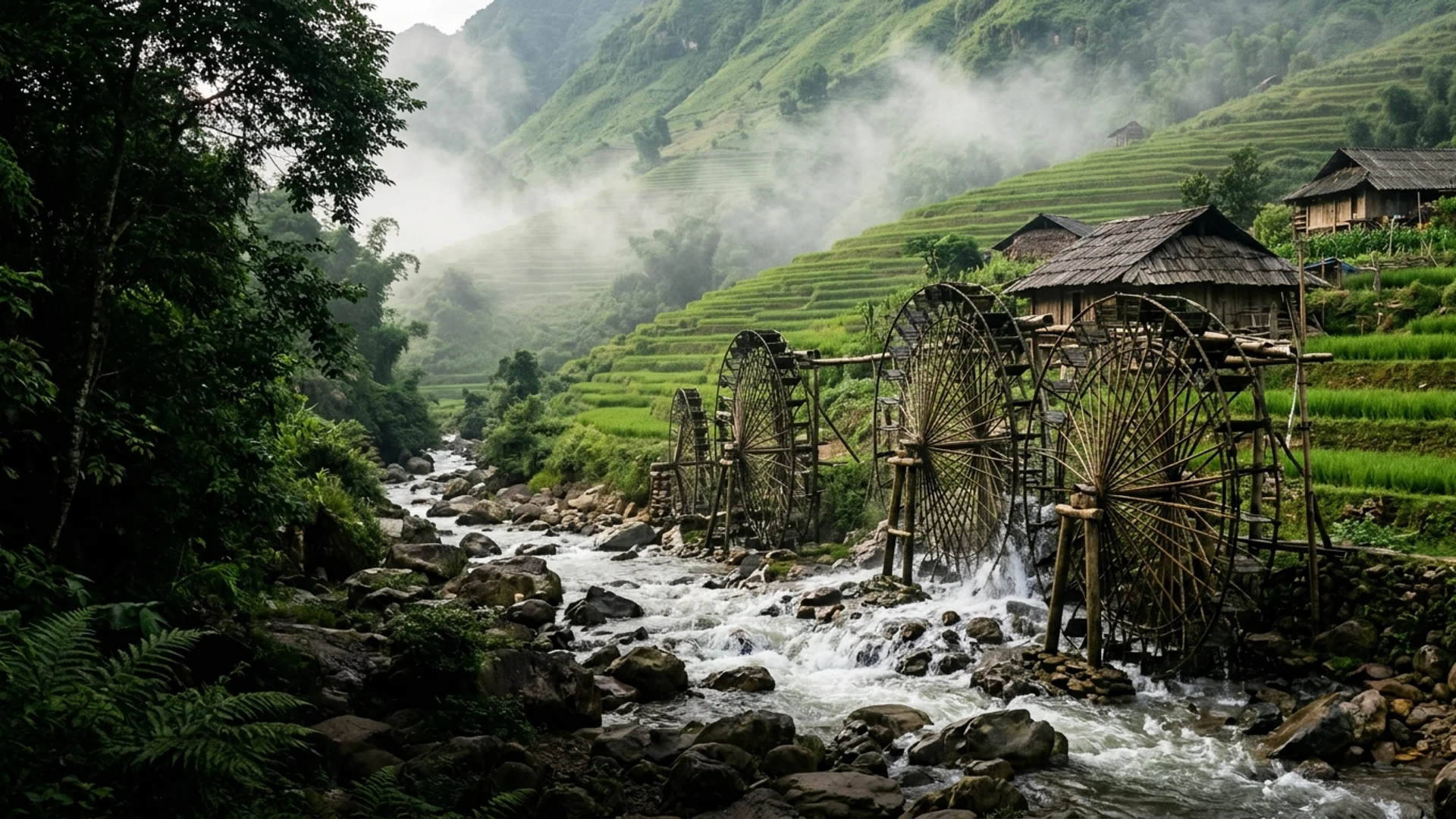
At the end of the walking circuit near the giant waterwheels and Tiên Sa waterfall, you will be in the Si Cặp river canyon—300 meters below Sa Pa town. To avoid climbing over 1,000 steep stone steps back up, licensed local motorbike riders wait at the suspension bridge outlet to drive visitors back up to Sa Pa town for 40,000 ₫ per person.
Prepare your stamina and gear to comfortably navigate the canyon trail.
Over 1,000 rustic stone steps are frequently damp from mountain mist and waterfall spray. Never wear smooth-soled flip-flops or heels; wear rubber-lugged trail shoes.
Prolonged downhill stepping exerts significant strain on knees and quadriceps. Walk at a measured pace, take slight diagonal steps, and rest at trailside gazebos.
Temperatures inside the canyon run 3–5°C cooler than the town ridge above. Shady trails and rushing river spray turn brisk by late afternoon; pack a light windbreaker.
Deep inside the canyon, cellular data is patchy and indigenous homesteads do not operate card payment terminals. Keep small cash notes from 20,000 ₫ to 200,000 ₫ handy.
The return hike from the canyon floor requires climbing steep uphill steps. If stamina is low or knees feel fatigued, hire a licensed local motorbike taxi (xe ôm) at the lower suspension bridge for a fixed 40,000 ₫ ascent back to the main gate or town.
In-depth editorial articles covering trekking routes, indigenous crafts, and practical field advice.
Discover the heritage of copper stylus wax drawing and natural cold vat indigo fermentation practiced by Black H'Mong artisans in Cát Cát Village.
A comprehensive field guide covering the 2.5 km steep flagstone trail, pacing tips, knee strain management, and return motorbike taxi logistics.
Browse our frequently asked questions (FAQ) or reach out to our editorial guide team for detailed visitor support.